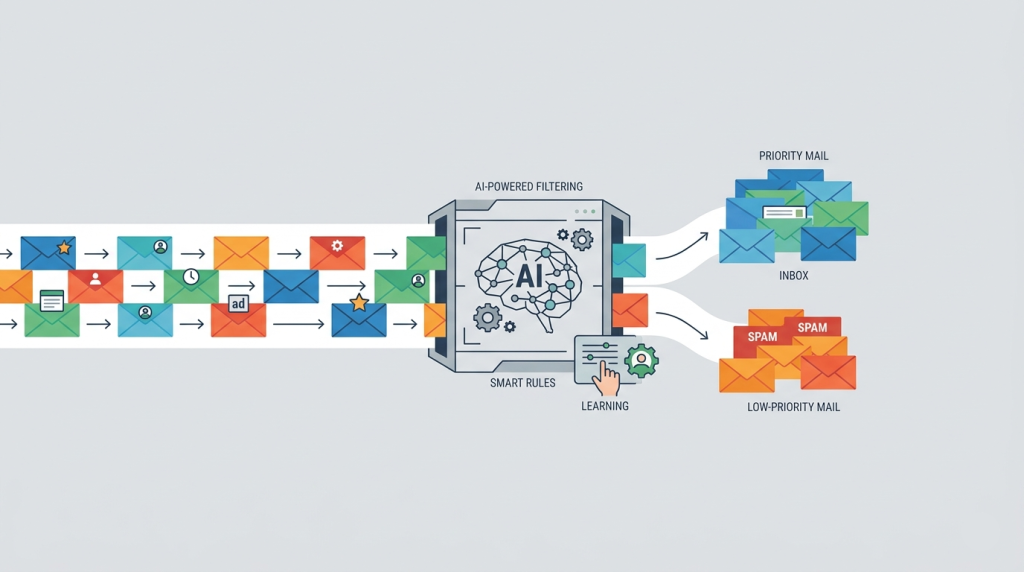
The landscape of digital communication is undergoing its most significant transformation since the invention of the SMTP protocol. In 2026, the gatekeepers of our inboxes are no longer basic algorithms scanning for a list of forbidden "trigger words." Instead, we are seeing the rise of sophisticated Artificial Intelligence layers that function more like human secretaries than rigid filters. These systems, powered by advanced Large Language Models, evaluate the semantic intent, the historical relationship between sender and recipient, and even the emotional sentiment of an email before deciding its fate. To survive this shift, professionals must move away from technical hacks and toward authentic, high-value communication. Understanding the mechanics of AI-driven filtering is not just a technical necessity—it is the only way to ensure your voice remains audible in a world where the "spam folder" has become an increasingly intelligent and unforgiving barrier to connection.
The Shift from Keywords to Semantic Intent
Traditional filters operated on a binary "if-this-then-that" logic. If an email contained the word "free" five times, it was flagged. Modern AI filters have evolved past this limitation. They now utilize Natural Language Processing (NLP) to understand context. This means an AI can distinguish between a spammy offer and a legitimate business invoice that happens to use similar terminology.
Because these systems understand "intent," they are looking for patterns of manipulation. If your email structure mimics the persuasive techniques of a phishing scam—even if the words themselves are harmless—the AI will recognize the psychological profile of the message. This shift rewards clarity and punishes the over-engineered "salesy" language that has dominated outreach for the last decade.
Reputation 2.0: Behavior-Based Scoring
In the past, your sender reputation was largely tied to your domain and IP address. In 2026, AI filters have introduced a "Behavioral Score." This score is a living metric based on how recipients interact with your content. Are they opening your emails but immediately deleting them? Are they reporting you as spam after reading the second paragraph?
AI models now track "engagement dwell time." If a user spends time reading your email, the filter interprets this as a signal of value. Conversely, if your emails are consistently ignored, the AI learns that your content is irrelevant to that specific demographic, leading to a slow but certain decline in your deliverability across the entire ISP network.
The Rise of Personal AI Assistants
It is no longer just the service providers (Gmail, Outlook) filtering your mail; many executives now use personal AI agents that act as a primary inbox buffer. These agents are trained on the user's specific preferences and previous communications.
How to Bypass the "AI Secretary"
- Referential Integrity: Mention specific past interactions or shared mutual contacts that an AI can verify in the user's archives.
- Value-First Logic: Personal agents are programmed to look for "asks" versus "gives." Ensure your email provides immediate utility.
- Avoid AI-Generated Uniformity: If your email looks like it was written by a standard GPT-4 prompt, the recipient's AI will detect the lack of human nuance and deprioritize it.
Adapting Your Outreach Strategy
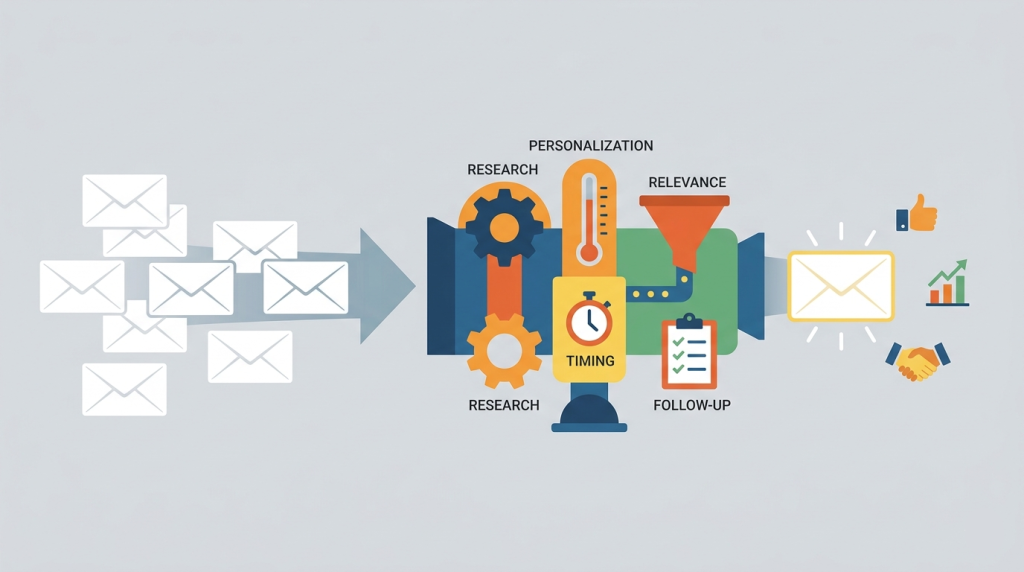
To adapt to an AI-filtered world, you must embrace "Hyper-Personalization." This goes beyond using a custom tag for a company name. You must curate your lists more strictly than ever. Sending 50 perfectly researched emails is now infinitely more effective than sending 5,000 "personalized" templates.
Furthermore, technical hygiene is now a prerequisite for the AI to even consider your content. Without robust DMARC, SPF, and DKIM authentication, your email lacks the "identity certificate" that modern AI filters use to verify that the sender is who they claim to be. In 2026, anonymity is synonymous with spam.
Conclusion: The Future is Authentic
As AI filtering becomes more pervasive, the competitive advantage shifts back to human creativity and genuine relationship-building. The systems are designed to weed out the noise, which means they are inadvertently creating a cleaner space for high-quality, relevant communication.
By focusing on transparency, respecting recipient boundaries, and providing real-world value, you can turn AI filtering from a hurdle into a tool that validates your credibility. The secret to adapting isn't outsmarting the machine; it's being the most human version of yourself in the inbox.